
Die TP53-Y220C-Mutation wurde bei vielen verschiedenen soliden Tumoren gefunden
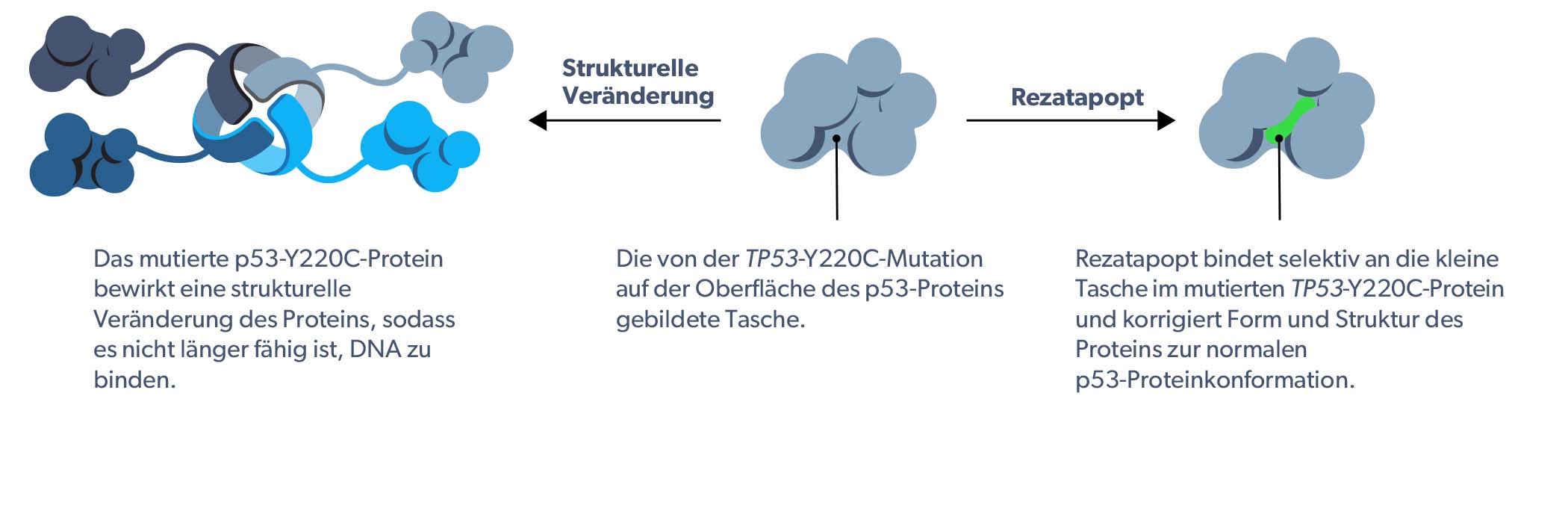
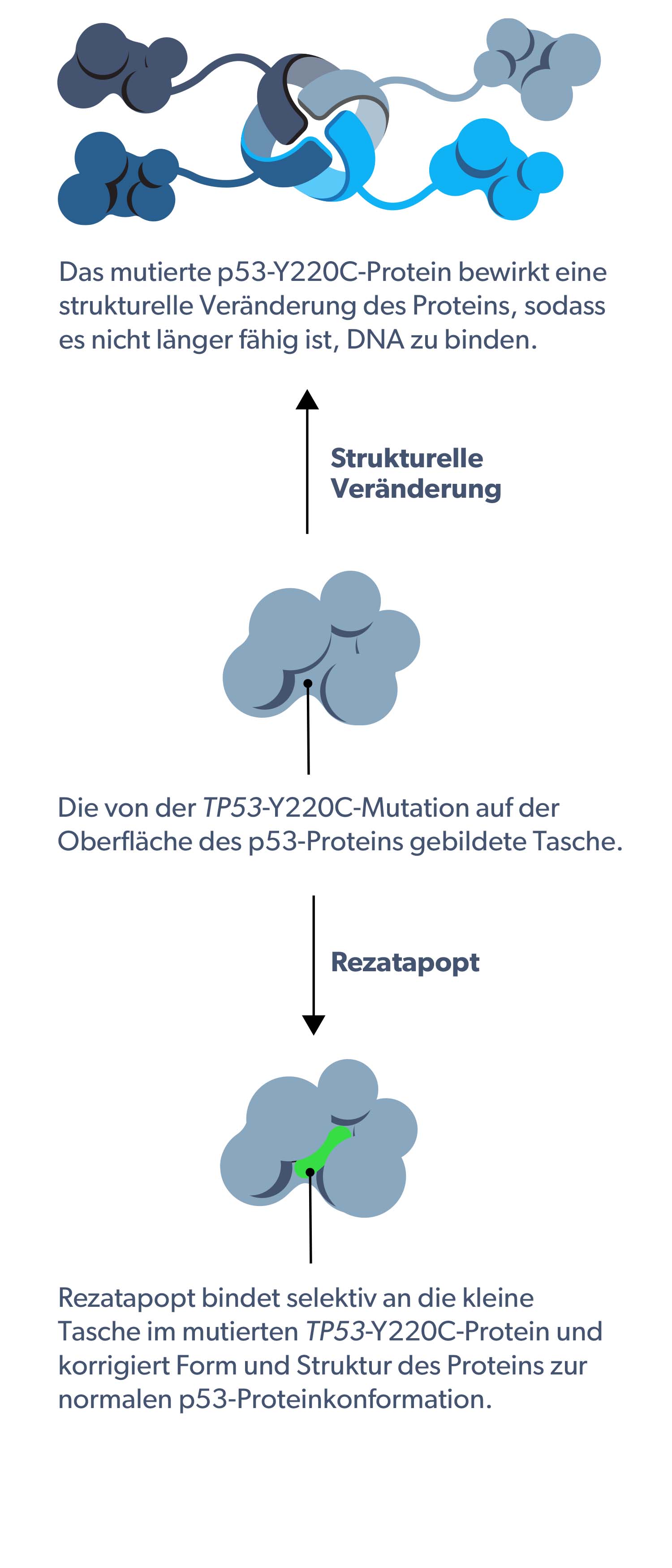
Die TP53-Y220C-Mutation ist ein potenzielles Ziel bei der Krebstherapie und wurde bei mehr als 30 verschiedenen soliden Tumorarten nachgewiesen.1–5 Unter Normalbedingungen ist p53 ein Tumor-Suppressor-Protein und spielt eine wichtige Rolle bei der Verhinderung der Tumorprogression.6,7 Das mutierte Protein p53 Y220C bildet eine kleine Tasche auf der Oberfläche des p53-Proteins, was zu einer strukturellen Veränderung des Proteins führt. Die Folge ist ein Funktionsverlust, der zu Tumorprogression führen kann.1–3,8
Quellen: 1. Blanden AR, et al. Drug Discov Today. 2015;20:1391–1397; 2. Baud MGJ, et al. Eur J Med Chem. 2018;152:101–114; 3. Tang Y, et al. J Phys Chem B. 2021;125:10138–10148; 4. FoundationInsights™. Eine proprietäre Datenbank, die unter Lizenz mit Überprüfung und Genehmigung durch Foundation Medicine® genutzt wird. Verfügbar unter: https://www.foundationmedicine.com/service/genomic-data-solutions. Zugriff Oktober 2025; 5. Schram A, et al. Poster-Präsentation bei AACR-NCI-EORTC 2023, Boston, USA. 11.–15. Oktober 2023; 6. Kastenhuber ER, et al. Cell. 2017;170:1062 – 1078; 7. Blagih J, et al. J Cell Sci. 2020;133:jcs237453; 8. Baugh EH, et al. Cell Death Differ. 2018;25:154–160.
Rezatapopt wird für TP53-Y220C-Krebserkrankungen untersucht
Rezatapopt ist der erste selektive, für das mutierte p53-Y220C-Protein spezifische p53-Reaktivator seiner Klasse.1–4 Rezatapopt wird derzeit für die Behandlung von Patienten und Patientinnen mit lokal fortgeschrittenen oder metastasierten soliden Tumoren mit einer TP53-Y220C-Mutation (oder TP53-Y220C-Krebs), unter anderem der Eierstöcke, Lunge, Brust und des Endometriums, geprüft.1–4
Quellen: 1. ClinicalTrials.gov. NCT04585750. The evaluation of PC14586 in patients with advanced solid tumors harboring a p53 Y220C mutation. Verfügbar unter: https://clinicaltrials.gov/study/NCT04585750. Zugriff Oktober 2025; 2. Dumble M, et al. Mündliche Präsentation bei AACR 2021, virtuell. 10.–15. April 2021; 3. Dumbrava EE, et al. Mündliche Präsentation bei ASCO 2022, Chicago, USA. 3.–7. Juni 2022; 4. Schram A, et al. Poster-Präsentation bei AACR-NCI-EORTC 2023, Boston, USA. 11.–15. Oktober 2023.
Rezatapopt reaktiviert selektiv p53 Y220C
Rezatapopt bindet selektiv an die kleine Tasche im mutierten TP53-Y220C-Protein und korrigiert Form und Struktur des Proteins zur normalen p53-Proteinkonformation.1–4 Die ursprüngliche Funktion des p53-Proteins wird wiederhergestellt, einschließlich der Fähigkeit, die Tumorprogression zu unterbrechen.1–4
Wirkmechanismus von Rezatapopt
Quellen: 1. ClinicalTrials.gov. NCT04585750. The evaluation of PC14586 in patients with advanced solid tumors harboring a p53 Y220C mutation. Verfügbar unter: https://clinicaltrials.gov/study/NCT04585750. Zugriff: September 2024; 2. Dumble M, et al. Mündliche Präsentation bei AACR 2021, virtuell. 10.–15. April 2021; 3. Dumbrava EE, et al. Mündliche Präsentation bei ASCO 2022, Chicago, USA. 3.–7. Juni 2022; 4. Schram A, et al. Poster-Präsentation bei AACR-NCI-EORTC 2023, Boston, USA. 11.–15. Oktober 2023.
Biomarker-Tests können TP53-Y220C-Krebserkrankungen erkennen
Biomarkertests können genomische Abweichungen im Tumorprofil Ihrer Patienten feststellen,1 u. a. die TP53 Y220C-Mutation. Daraus lassen sich Informationen ableiten, ob eine zugelassene Therapie oder klinische Studie wie die PYNNACLE-Studie eine Option für Ihre Patienten sein könnte.1
Quelle: 1. American Cancer Society. Biomarker-Tests und Krebsbehandlung. Verfügbar unter: https://www.cancer.org/cancer/diagnosis-staging/tests/biomarker-tests.html. Zugriff Oktober 2025.
Präsentationen
Recent präsentationens
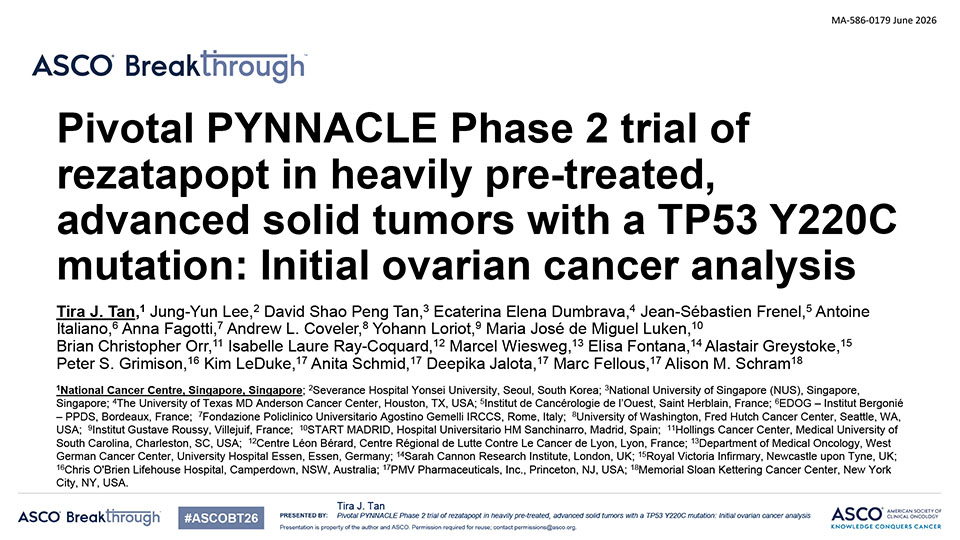
ASCO Breakthrough 2026, Tan et al, Oral presentation, Pivotal PYNNACLE Phase 2 trial of rezatapopt in heavily pre-treated, advanced solid tumors with a TP53 Y220C mutation: Initial ovarian cancer analysis
(Auf Englisch verfügbar)

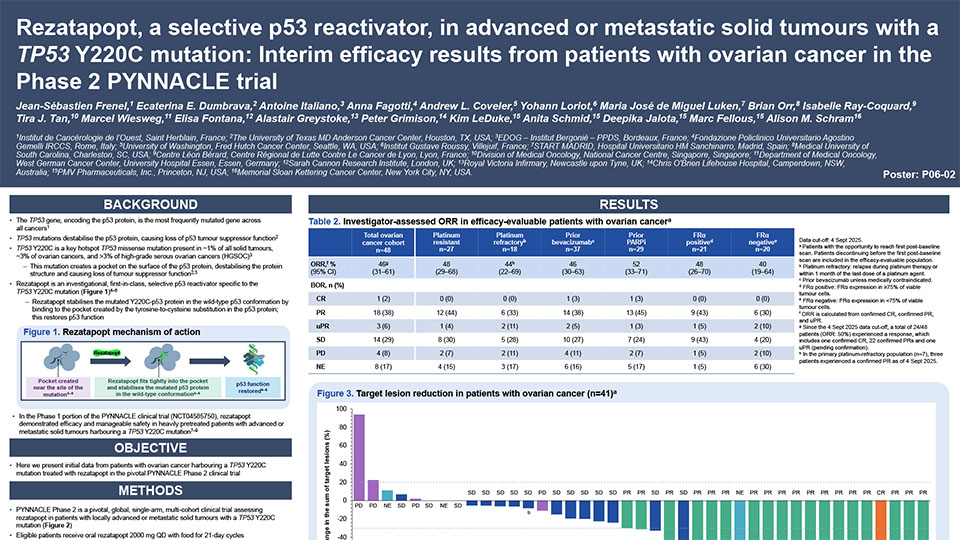
2026
ASCO Breakthrough 2026, Tan et al, Oral presentation, Pivotal PYNNACLE Phase 2 trial of rezatapopt in heavily pre-treated, advanced solid tumors with a TP53 Y220C mutation: Initial ovarian cancer analysis
(Auf Englisch verfügbar)
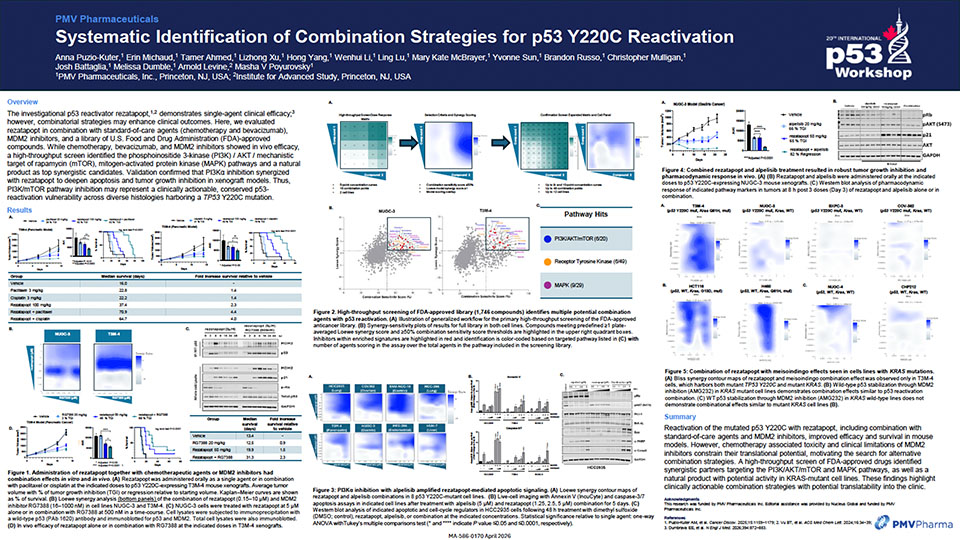
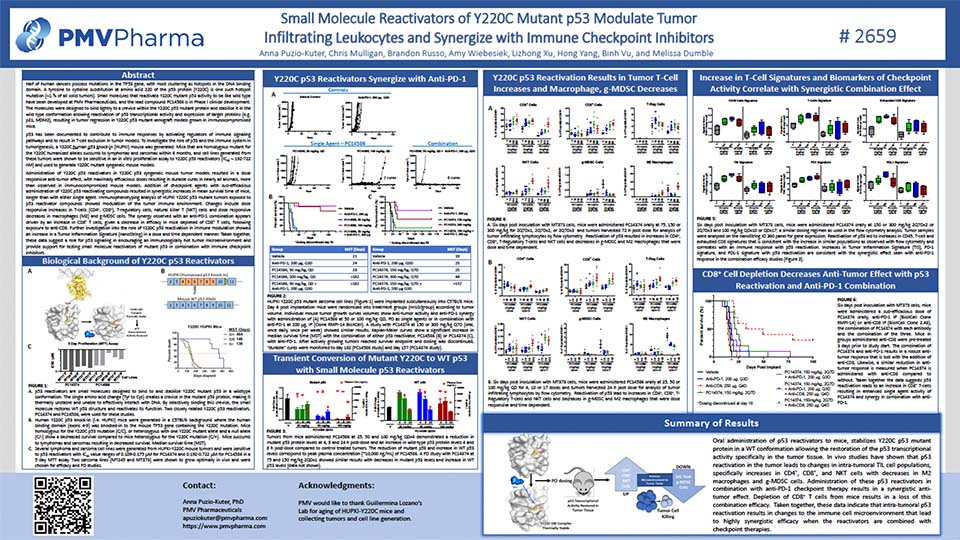
20th International p53 Workshop, Puzio-Kuter et al, Poster presentation, Systematic Identification of Combination Strategies for p53 Y220C Reactivation
(Auf Englisch verfügbar)
2025
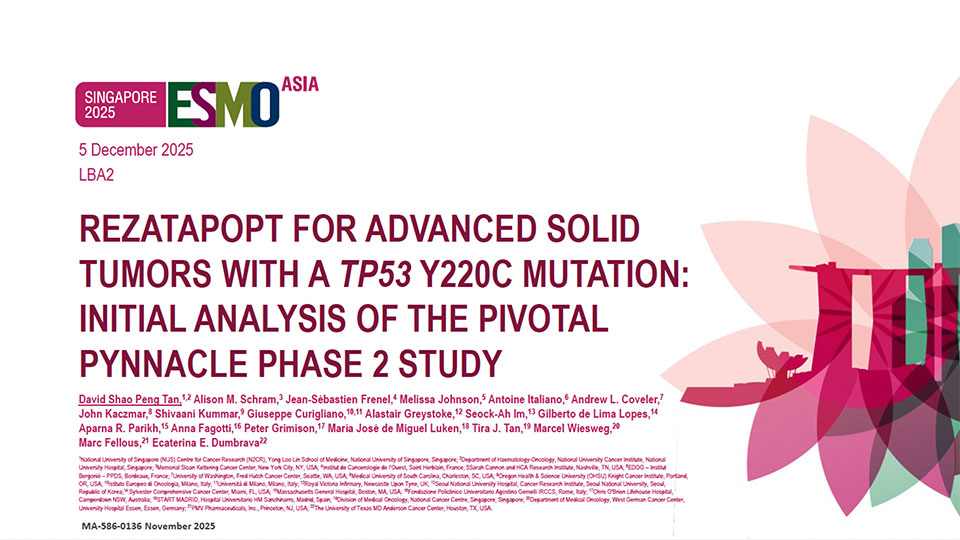
ESMO Asia 2025, Tan et al, Oral presentation, PYNNACLE Phase 2: Initial analysis of efficacy and safety of rezatapopt
(Auf Englisch verfügbar)
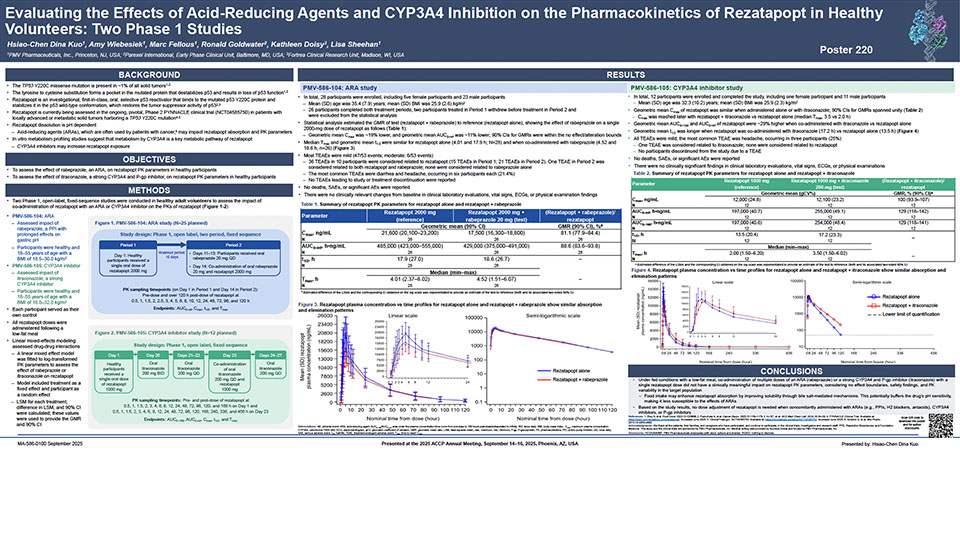
ACCP 2025, Kuo et al, Poster presentation, Phase 1 studies: Effects of acid-reducing agents and CYP3A4 inhibition on rezatapopt in healthy volunteers
(Auf Englisch verfügbar)
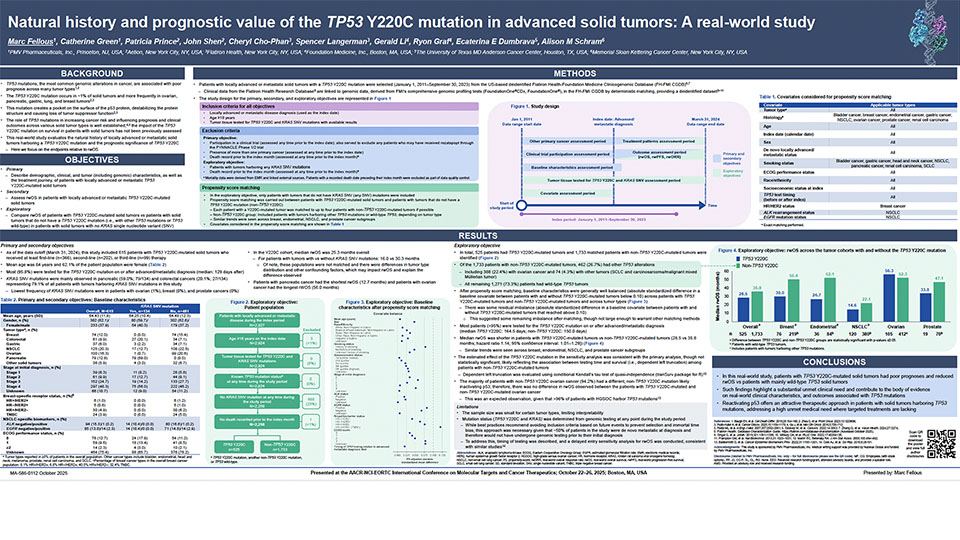
AACR-NCI-EORTC 2025, Fellous et al, Poster presentation, Real-world study: Natural history and prognostic value of the TP53 Y220C mutation in advanced solid tumors
(Auf Englisch verfügbar)
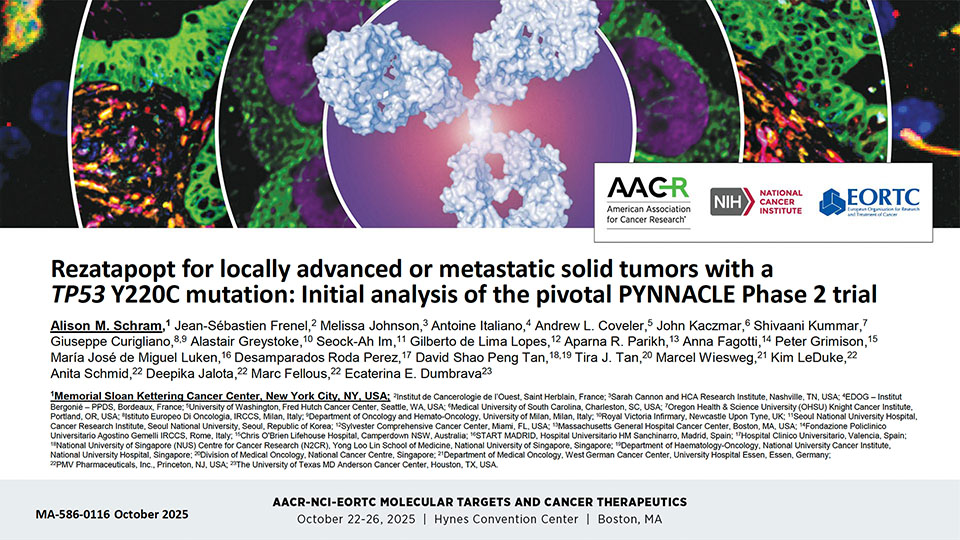
AACR-NCI-EORTC 2025, Schram et al, Oral presentation, PYNNACLE Phase 2: Initial analysis of efficacy and safety of rezatapopt
(Auf Englisch verfügbar)
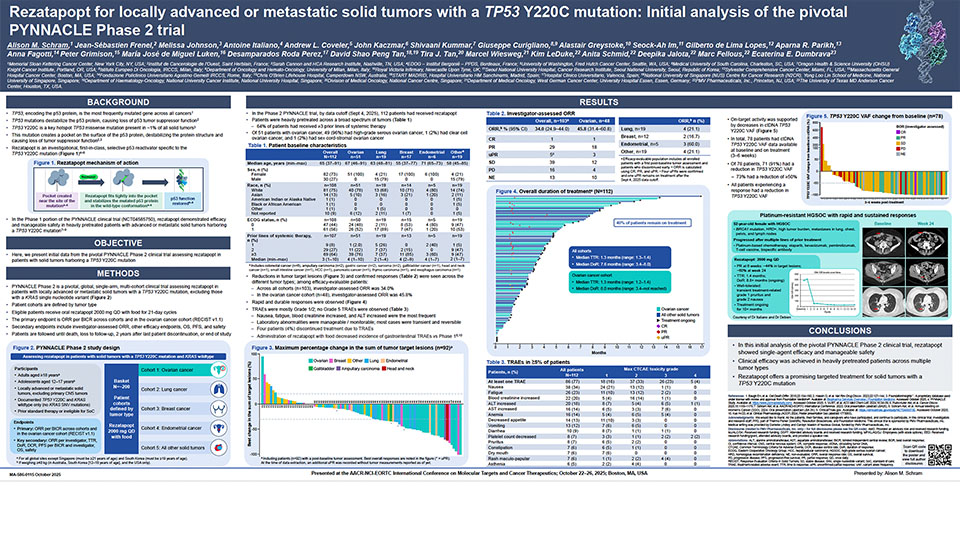
AACR-NCI-EORTC 2025, Schram et al, Poster presentation, PYNNACLE Phase 2: Initial analysis of efficacy and safety of rezatapopt
(Auf Englisch verfügbar)
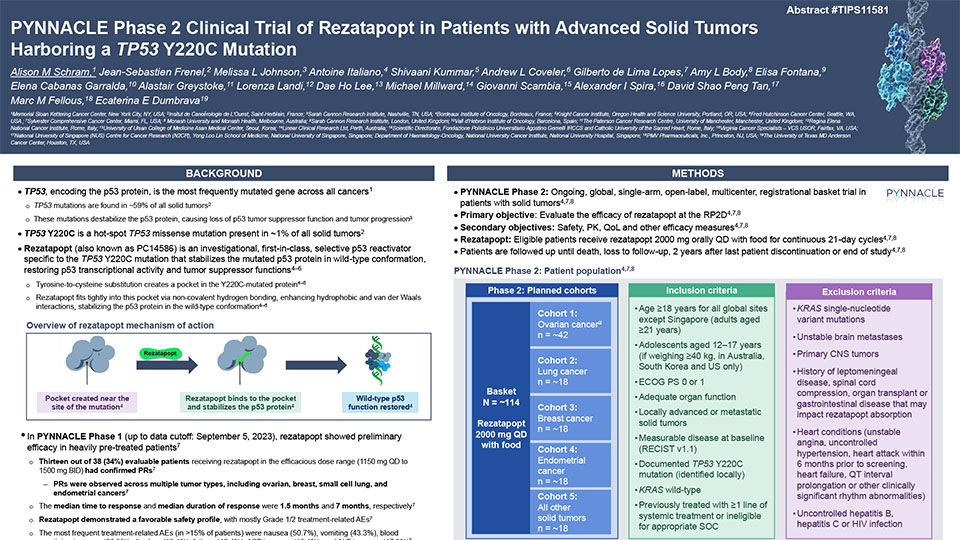
ASCO 2025, Schram et al, Poster presentation, PYNNACLE Phase 2: Study design and protocol
(Auf Englisch verfügbar)
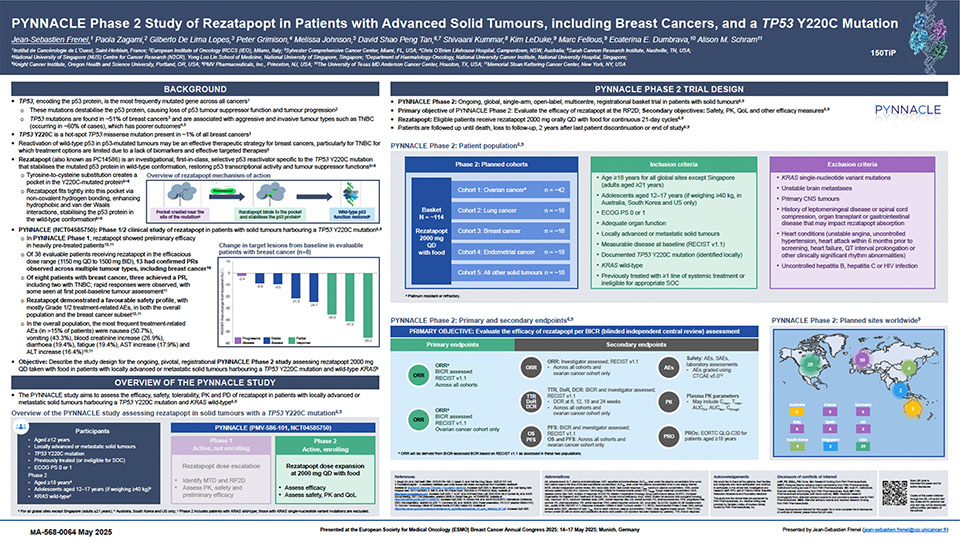
ESMO Breast 2025, Frenel et al, Poster presentation, PYNNACLE Phase 2: Study design and protocol
(Auf Englisch verfügbar)
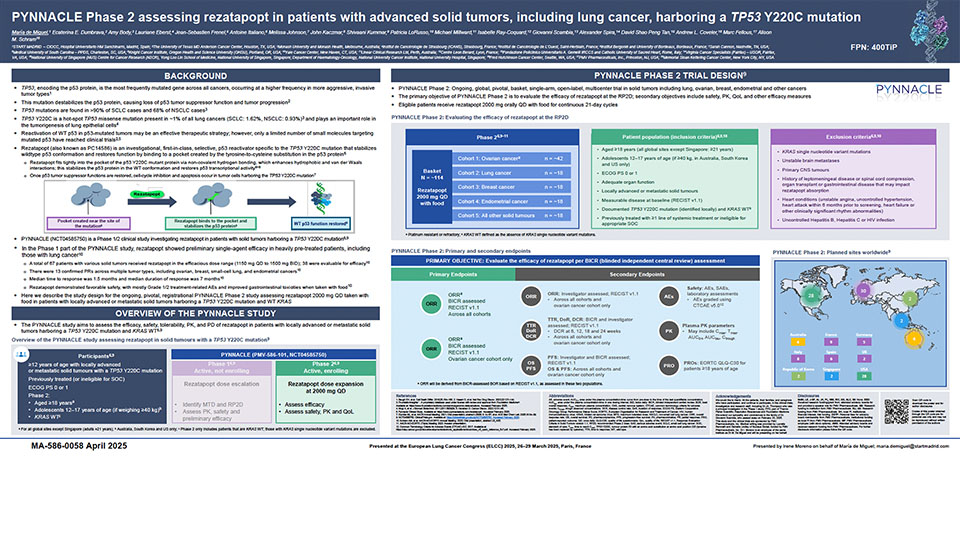
ELCC 2025, Miguel et al, Poster presentation, PYNNACLE Phase 2: Study design and protocol
(Auf Englisch verfügbar)
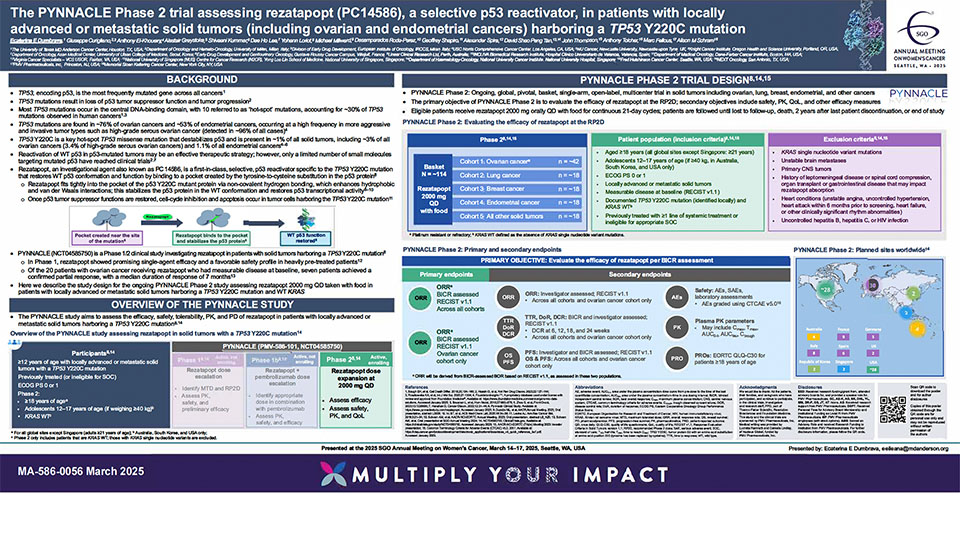
SGO 2025, Dumbrava et al, Poster presentation, PYNNACLE Phase 2: Study design and protocol
(Auf Englisch verfügbar)
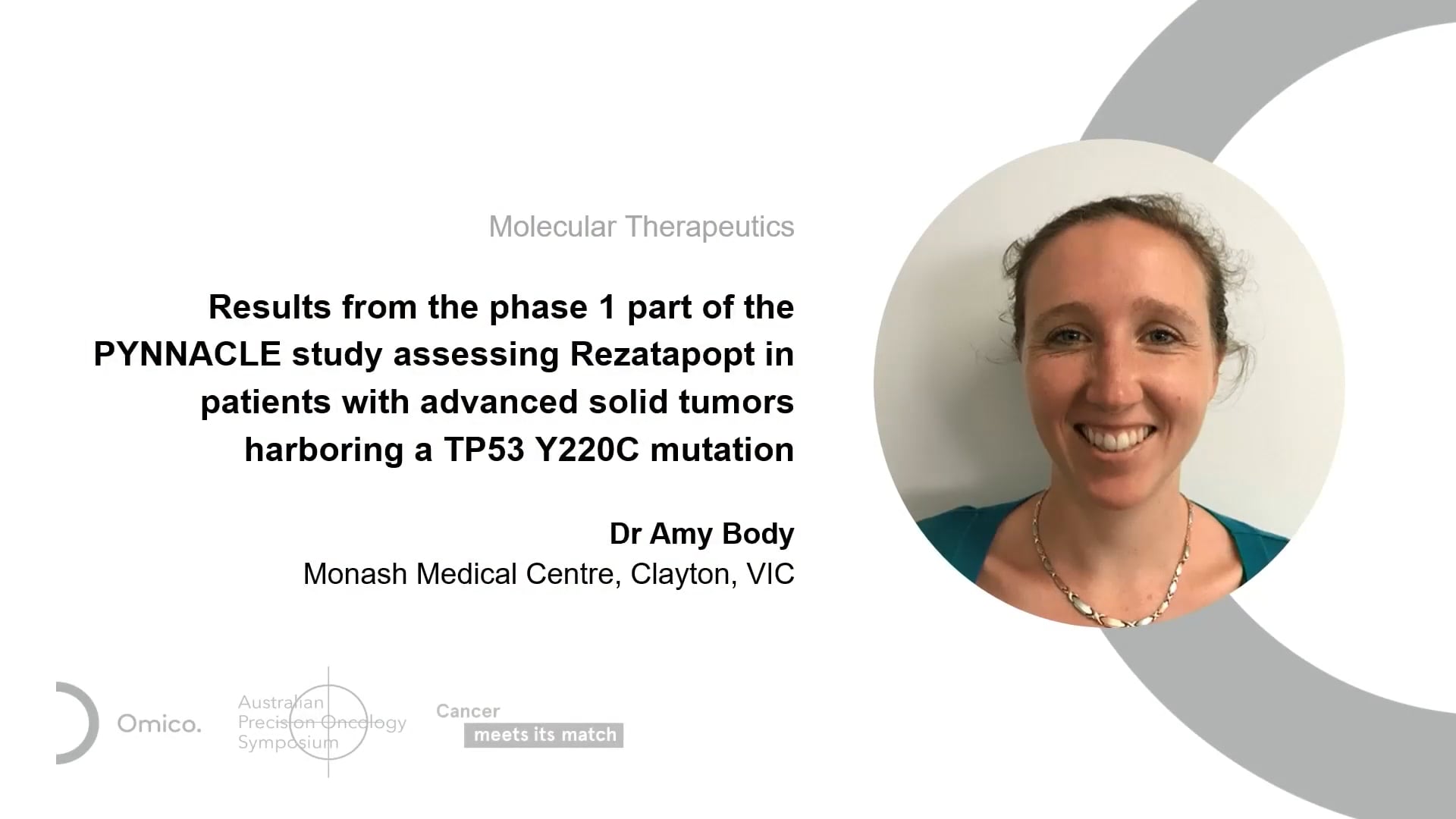
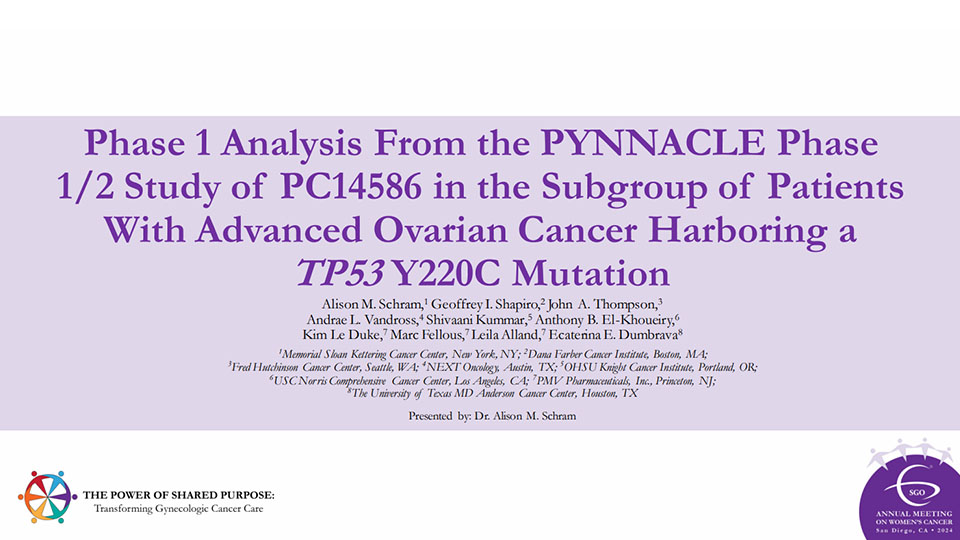
APOS 2025, Body et al, Oral presentation, PYNNACLE Phase 1: Efficacy and safety across all tumor types and ovarian and breast cancer cohorts
(Auf Englisch verfügbar)
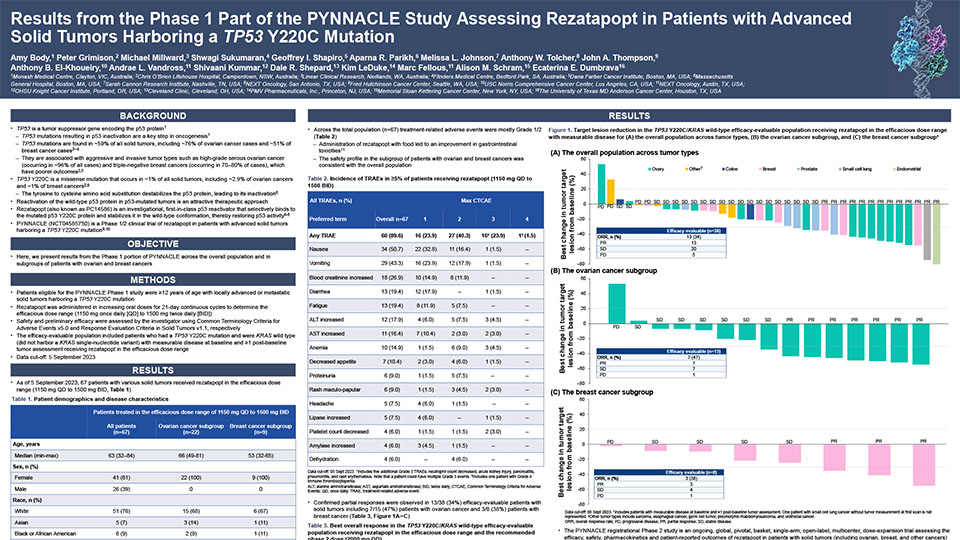
2024
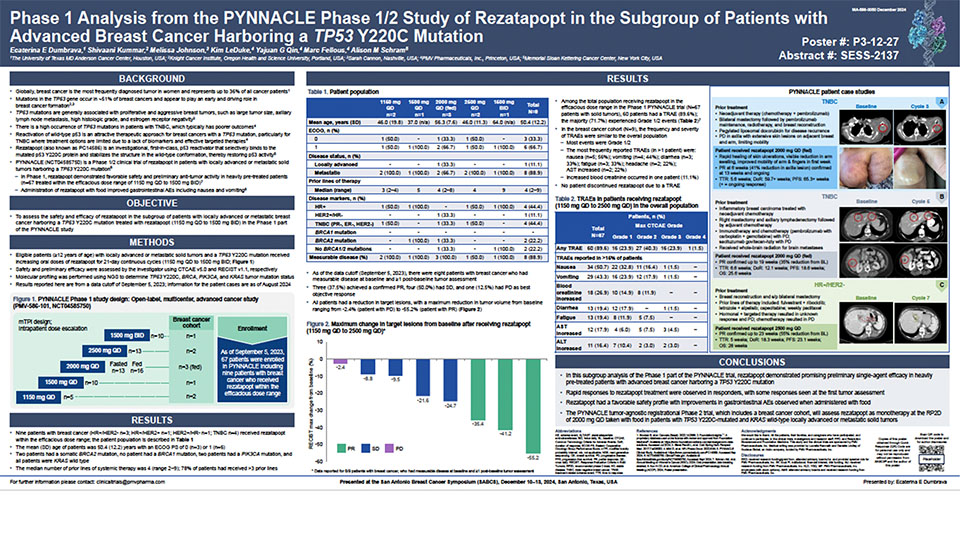
SABCS 2024, Dumbrava et al, Poster presentation, PYNNACLE Phase 1: Efficacy and safety of rezatapopt in the breast cancer cohort with patient cases
(Auf Englisch verfügbar)
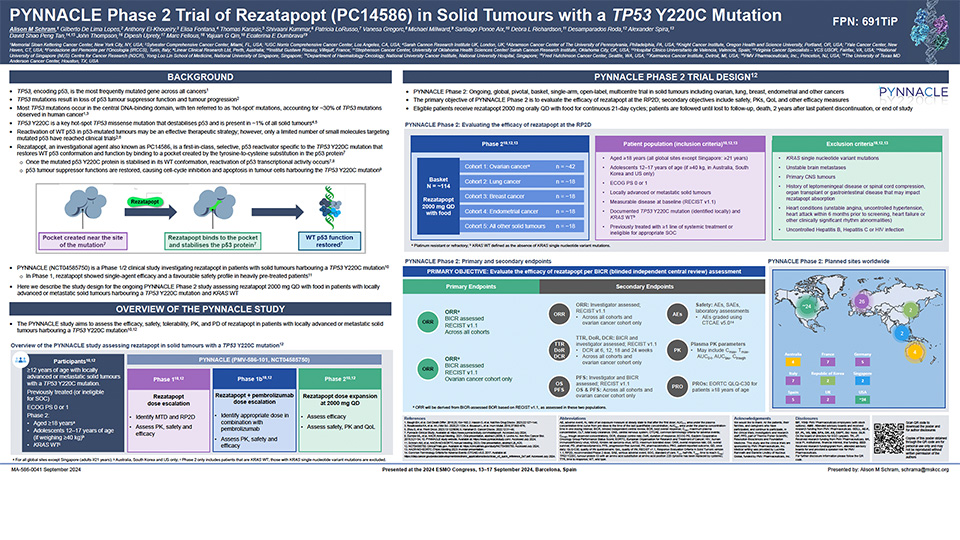
ESMO 2024, Schram et al, Poster presentation, PYNNACLE Phase 2: Study design and protocol
(Auf Englisch verfügbar)
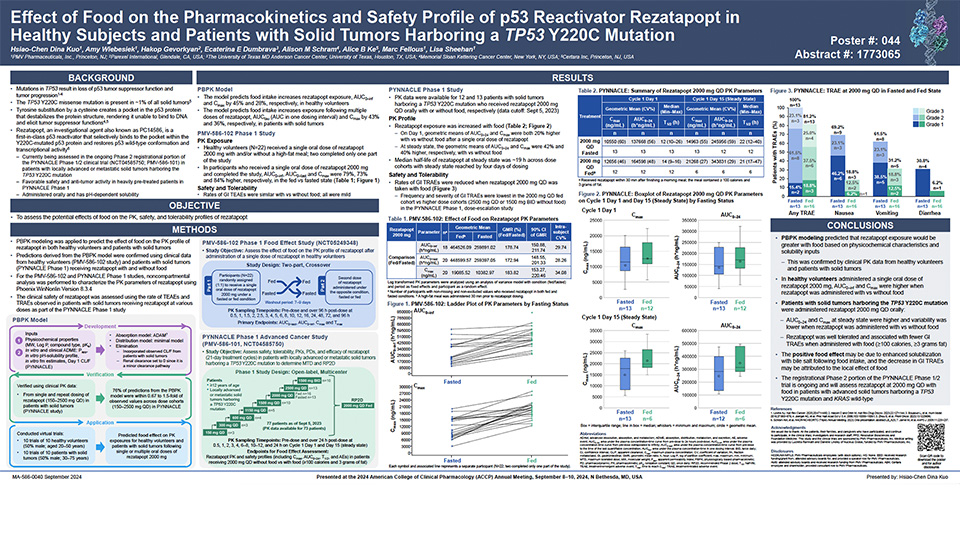
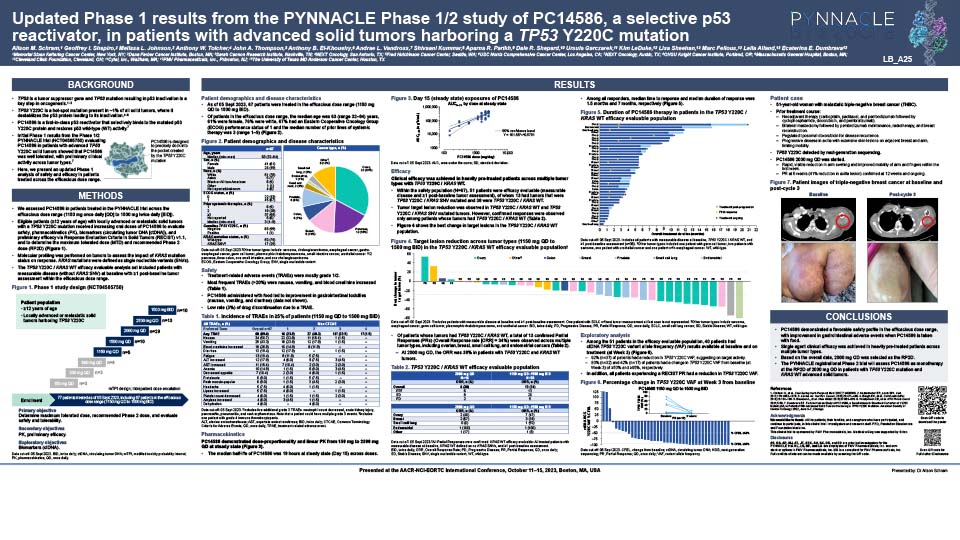
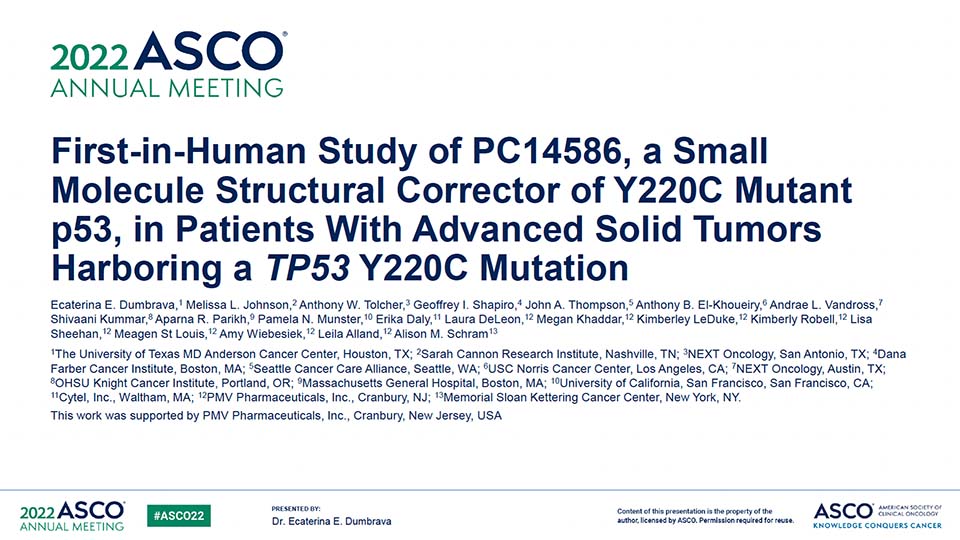
2023
Veröffentlichungen
Recent veröffentlichungen
Dumbrava et al, Phase 1 Study of Rezatapopt, a p53 Reactivator, in TP53 Y220C–Mutated Tumors, NEJM, 2026
(Auf Englisch verfügbar)
2026
2025
Schram et al, PYNNACLE phase II clinical trial protocol: rezatapopt (PC14586) monotherapy in advanced or metastatic solid tumors with a TP53 Y220C mutation, Future Oncol, 2025
(Auf Englisch verfügbar)
Puzio-Kuter et al, Rezatapopt: Restoration of tumor suppressor function of Y220C-mutant p53, Cancer Discov, 2025
(Auf Englisch verfügbar)
Kummar et al, The roles of mutant p53 in reprogramming and inflammation in breast cancers, Cell Death Differ, 2025
(Auf Englisch verfügbar)
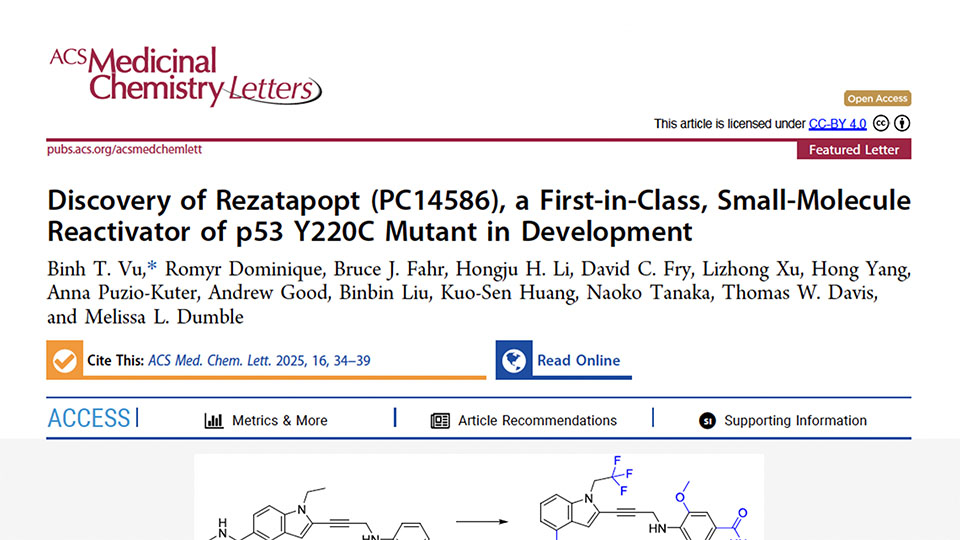
Vu et al, Discovery and development of Rezatapopt, ACS Med Chem Lett, 2025
(Disponible en anglaise)
Weitere Informationen zu klinischen Studien
Ihre Patienten können mehr über klinische Studien vom National Cancer Institute, der American Cancer Society und der Europäische Arzneimittel-Agentur erfahren.
Weitere Informationen zu Rezatapopt in der PYNNACLE-Studie finden Sie unter: clinicaltrials.gov
Bitte kontaktieren Sie das PMV Pharmaceuticals Clinical Study Information Center
+1 (609) 235-4038
clinicaltrials@pmvpharma.com
Rezatapopt ist ein Prüfpräparat, das noch nicht von einer Gesundheitsbehörde zugelassen ist.
Auf den Bildern werden keine tatsächlichen Studienteilnehmer dargestellt.
MA-586-0107 October 2025