
La mutazione TP53 Y220C è stata identificata in molti tipi di tumori solidi
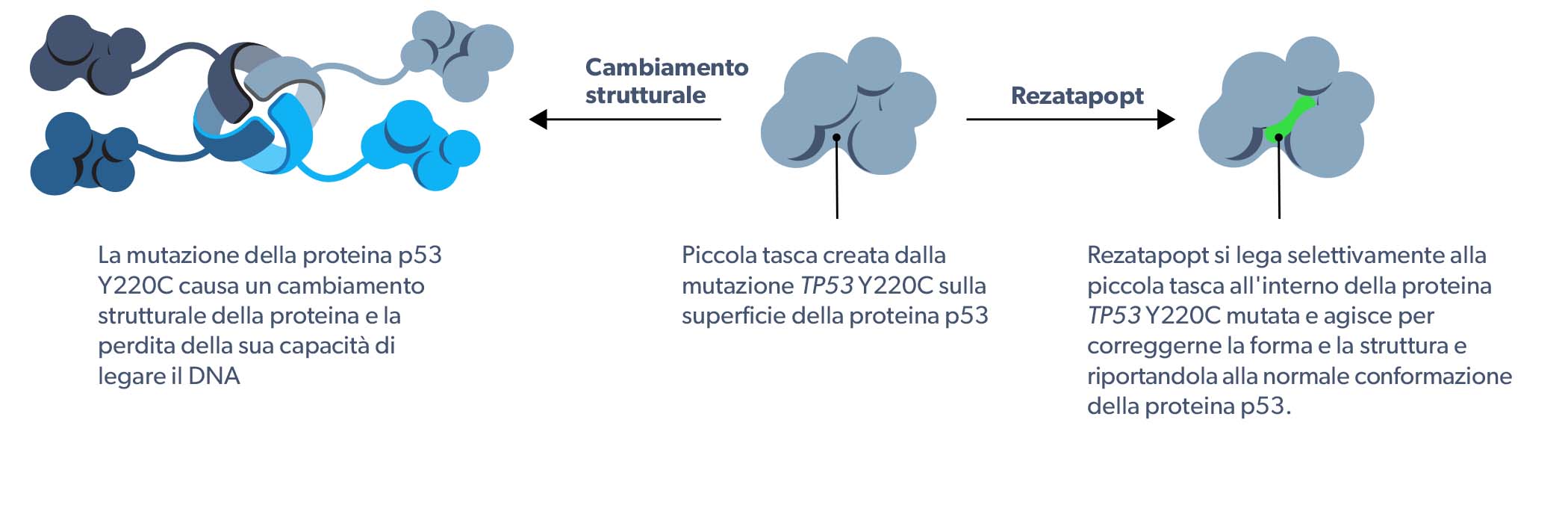
La mutazione TP53 Y220C è un potenziale bersaglio terapeutico nel cancro ed è stata identificata in oltre 30 tipi diversi di tumori solidi.1–5 In condizioni normali, p53 è una proteina soppressore del tumore e ha un ruolo chiave nell'interrompere la progressione tumorale.6,7 La proteina p53 Y220C mutata forma una piccola tasca sulla superficie della proteina p53, che fa perdere alla proteina la sua forma strutturale; ciò comporta una perdita della sua funzione e può portare alla progressione del tumore.1–3,8
Bibliografia: 1. Blanden AR, et al. Drug Discov Today. 2015;20:1391–1397; 2. Baud MGJ, et al. Eur J Med Chem. 2018;152:101–114; 3. Tang Y, et al. J Phys Chem B. 2021;125:10138–10148; 4. FoundationInsights™. Un database proprietario utilizzabile su licenza soggetta a revisione e approvazione da parte di Foundation Medicine®. Disponibile sul sito: https://www.foundationmedicine.com/service/genomic-data-solutions. Ultimo accesso: ottobre 2025; 5. Schram A, et al. Poster presentation at AACR-NCI-EORTC 2023, Boston, Stati Uniti. 11–15 ottobre 2023; 6. Kastenhuber ER, et al. Cell. 2017;170:1062–1078; 7. Blagih J, et al. J Cell Sci. 2020;133:jcs237453; 8. Baugh EH, et al. Cell Death Differ. 2018;25:154–160.
Rezatapopt è in fase di studio nel tumore TP53 Y220C
Rezatapopt è un farmaco capostipite, selettivo di p53, che agisce come riattivatore specifico per la proteina mutata p53 Y220C.1–4 Rezatapopt è attualmente in fase di studio per il trattamento di pazienti con tumori solidi localmente avanzati o metastatici che presentano una mutazione TP53 Y220C (o un tumore TP53 Y220C), tra cui, a titolo esemplificativo, ma non esaustivo il tumore dell'ovaio, del polmone, della mammella e dell'endometrio.1–4
Bibliografia: 1. ClinicalTrials.gov. NCT04585750. The evaluation of PC14586 in patients with advanced solid tumors harboring a p53 Y220C mutation. Disponibile all'indirizzo: https://clinicaltrials.gov/study/NCT04585750. Ultimo accesso: ottobre 2025; 2. Dumble M, et al. Oral presentation at AACR 2021, da remoto. 10–15 aprile 2021; 3. Dumbrava EE, et al. Oral presentation at ASCO 2022, Chicago, Stati Uniti. 11–15 giugno 2022; 4. Schram A, et al. Poster presentation at AACR-NCI-EORTC 2023, Boston, Stati Uniti. 11–15 ottobre 2023.
Rezatapopt riattiva selettivamente la p53 Y220C
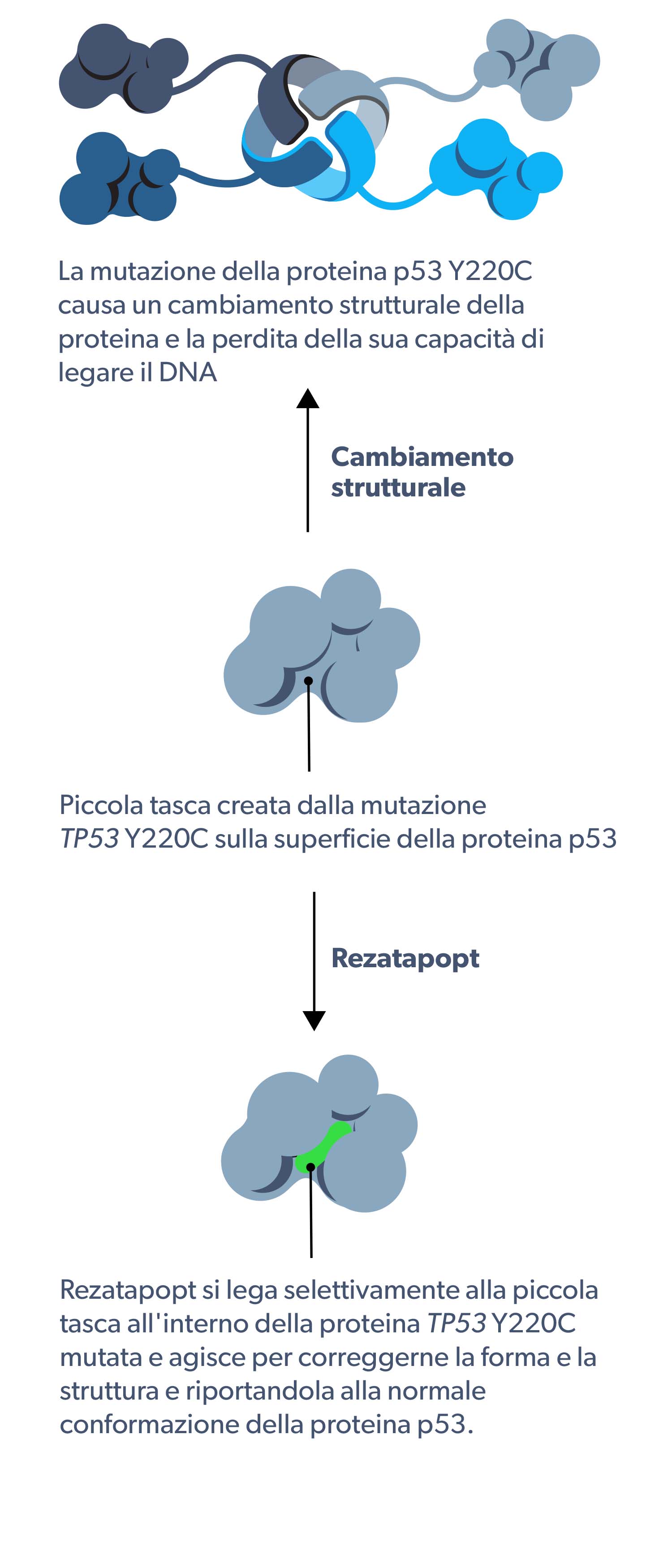
Rezatapopt si lega selettivamente alla piccola tasca all'interno della proteina TP53 Y220C mutata e agisce per correggerne la forma e la struttura e riportandola alla normale conformazione della proteina p53.1–4 In questo modo vengono ripristinate le funzioni originarie della proteina p53, inclusa la capacità di interrompere la progressione del tumore.1–4
Meccanismo di azione di Rezatapopt
Bibliografia: 1. ClinicalTrials.gov. NCT04585750. The evaluation of PC14586 in patients with advanced solid tumors harboring a p53 Y220C mutation. Disponibile all'indirizzo: https://clinicaltrials.gov/study/NCT04585750. Accesso effettuato a settembre 2024; 2. Dumble M, et al. Oral presentation at AACR 2021, da remoto. 10–15 aprile 2021; 3. Dumbrava EE, et al. Oral presentation at ASCO 2022, Chicago, Stati Uniti. 11–15 giugno 2022; 4. Schram A, et al. Poster presentation at AACR-NCI-EORTC 2023, Boston, Stati Uniti. 11–15 ottobre 2023.
Il test dei biomarcatori può identificare il tumore TP53 Y220C
L'analisi dei biomarcatori può individuare le anomalie genomiche del profilo tumorale del suo paziente,1 compresa la mutazione Y220C del gene TP53. Ciò consente di avere informazioni per determinare se una terapia o uno studio clinico approvati, come lo studio PYNNACLE, sia un'opzione per il suo paziente.1
Bibliografia: 1. American Cancer Society. Biomarker tests and cancer treatment. Disponibile all'indirizzo: https://www.cancer.org/cancer/diagnosis-staging/tests/biomarker-tests.html. Ultimo accesso: ottobre 2025.
Presentazioni
Recent presentations
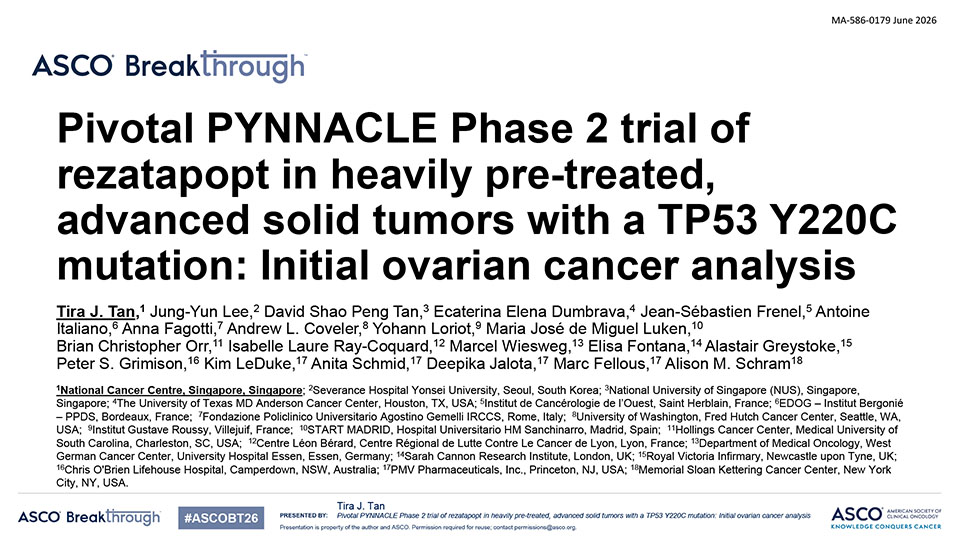
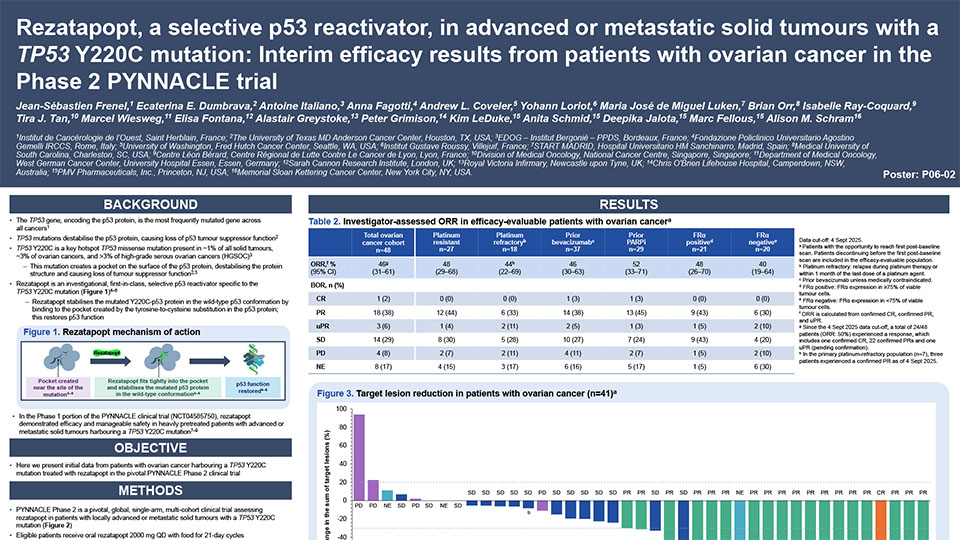
ASCO Breakthrough 2026, Tan et al, Oral presentation, Pivotal PYNNACLE Phase 2 trial of rezatapopt in heavily pre-treated, advanced solid tumors with a TP53 Y220C mutation: Initial ovarian cancer analysis
(Disponibile in inglese)

2026
ASCO Breakthrough 2026, Tan et al, Oral presentation, Pivotal PYNNACLE Phase 2 trial of rezatapopt in heavily pre-treated, advanced solid tumors with a TP53 Y220C mutation: Initial ovarian cancer analysis
(Disponibile in inglese)
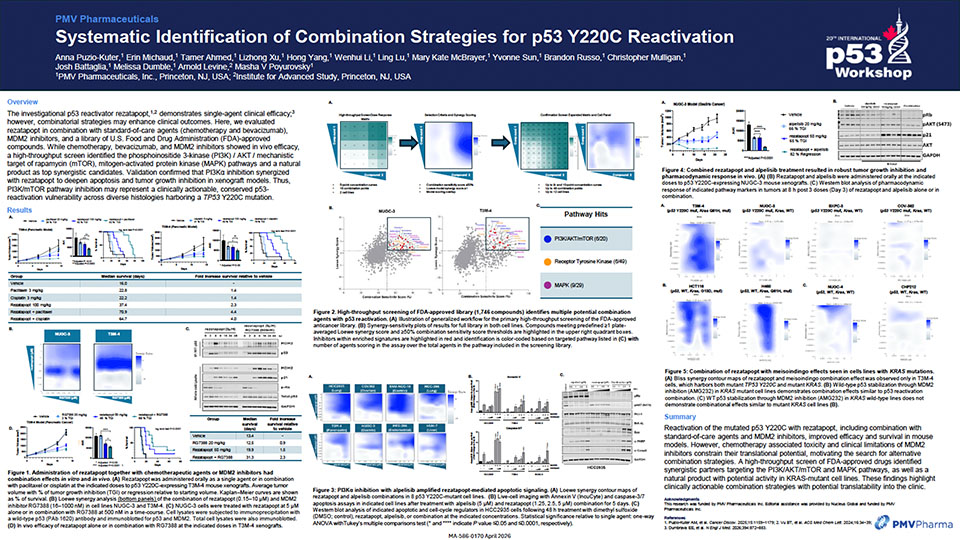
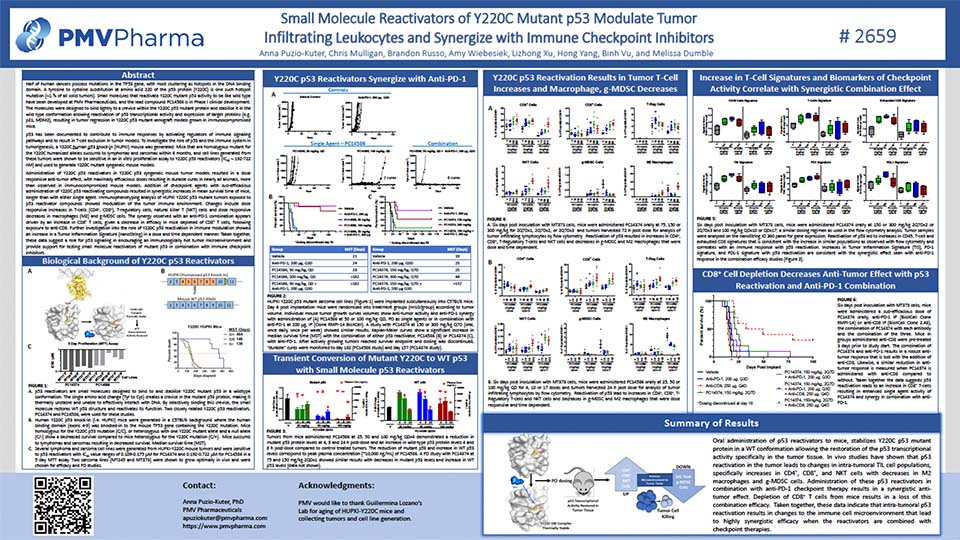
20th International p53 Workshop, Puzio-Kuter et al, Poster presentation, Systematic Identification of Combination Strategies for p53 Y220C Reactivation
(Disponibile in inglese)
2025
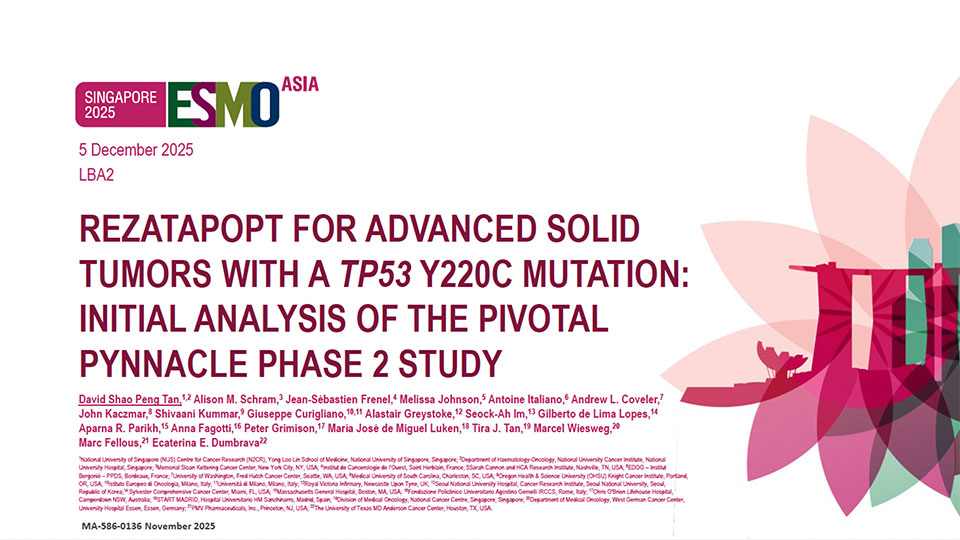
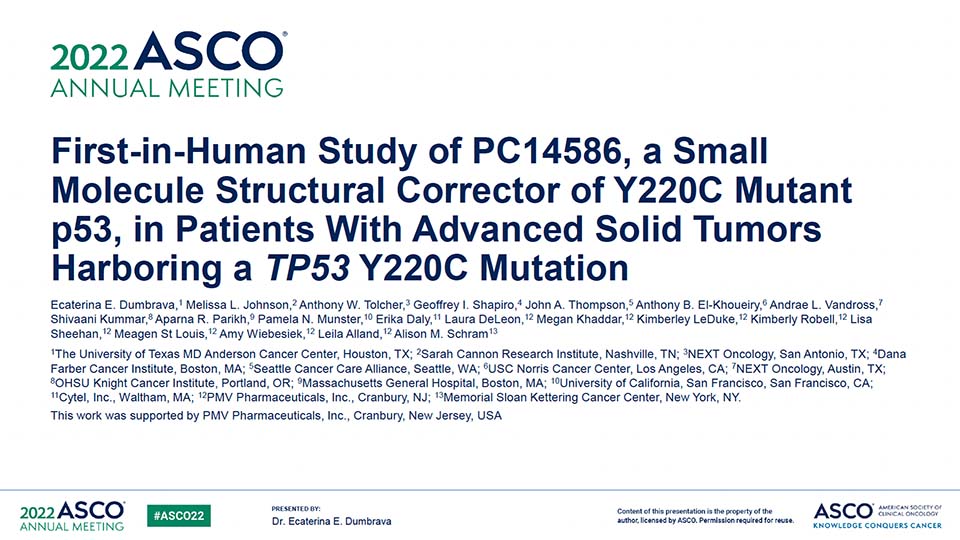
ESMO Asia 2025, Tan et al, Oral presentation, PYNNACLE Phase 2: Initial analysis of efficacy and safety of rezatapopt
(Disponibile in inglese)
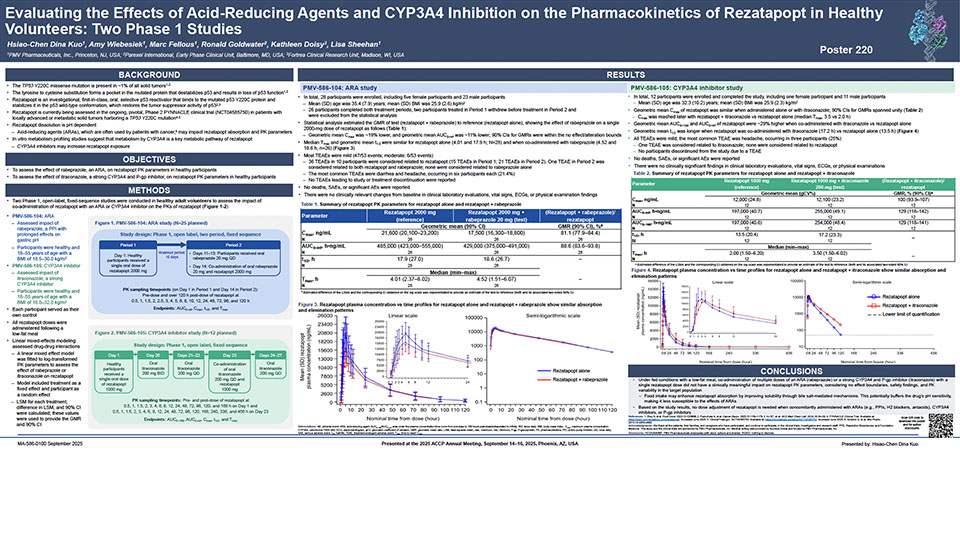
ACCP 2025, Kuo et al, Poster presentation, Phase 1 studies: Effects of acid-reducing agents and CYP3A4 inhibition on rezatapopt in healthy volunteers
(Disponibile in inglese)
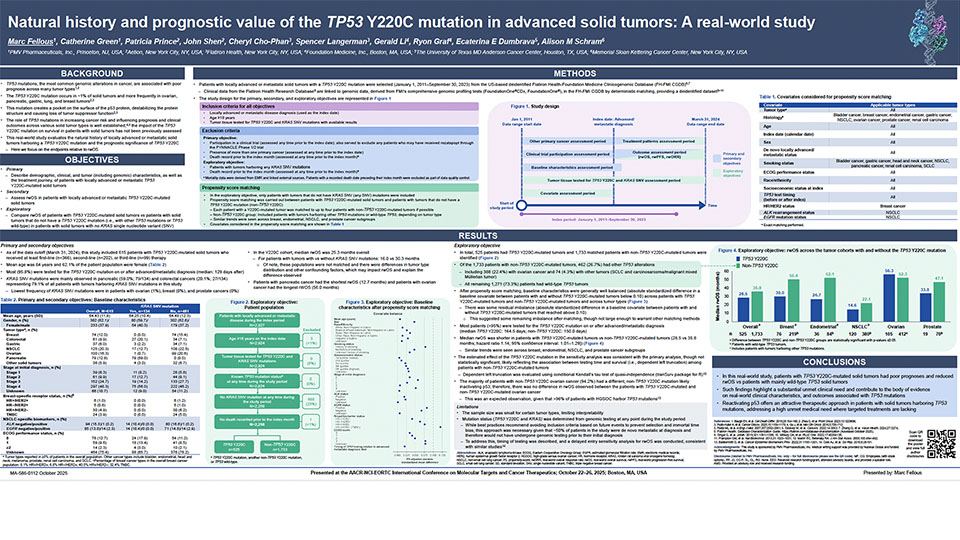
AACR-NCI-EORTC 2025, Fellous et al, Poster presentation, Real-world study: Natural history and prognostic value of the TP53 Y220C mutation in advanced solid tumors
(Disponibile in inglese)
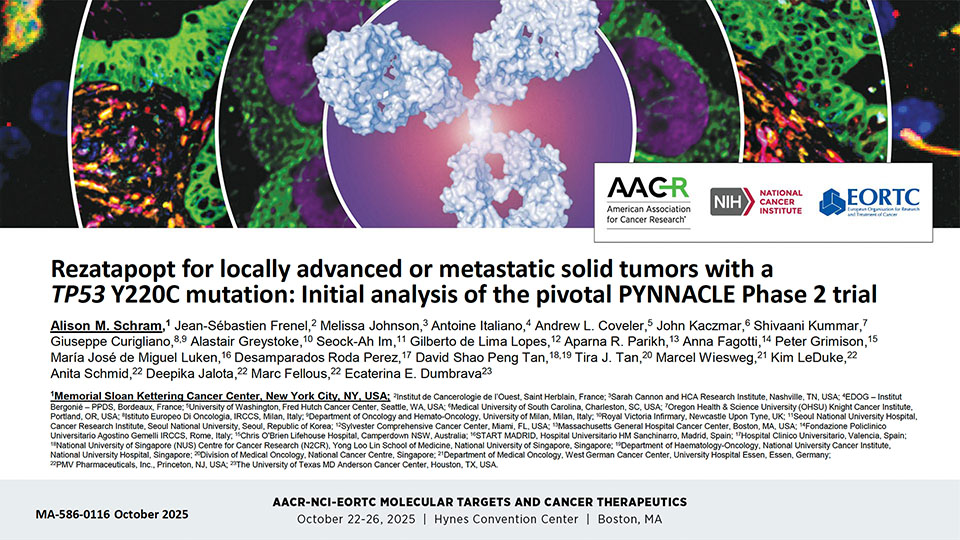
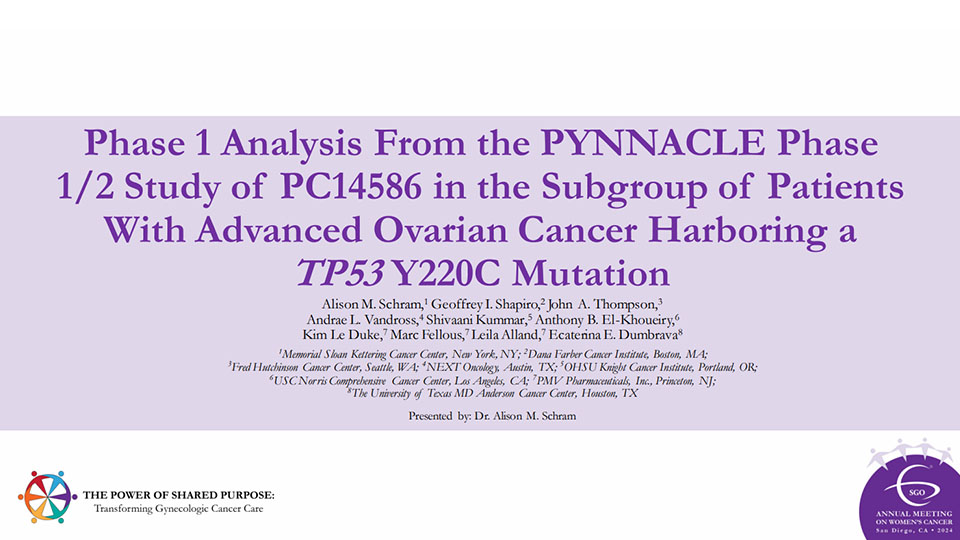
AACR-NCI-EORTC 2025, Schram et al, Oral presentation, PYNNACLE Phase 2: Initial analysis of efficacy and safety of rezatapopt
(Disponibile in inglese)
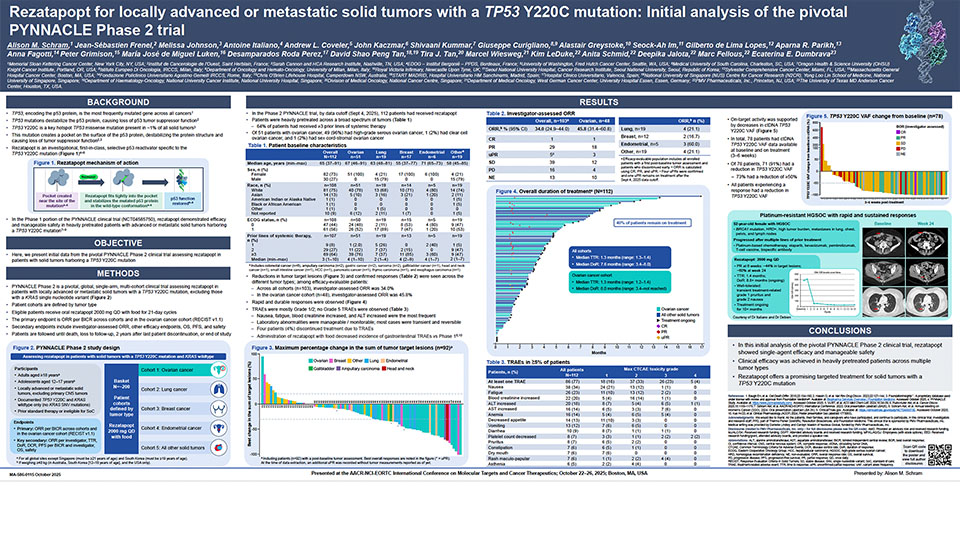
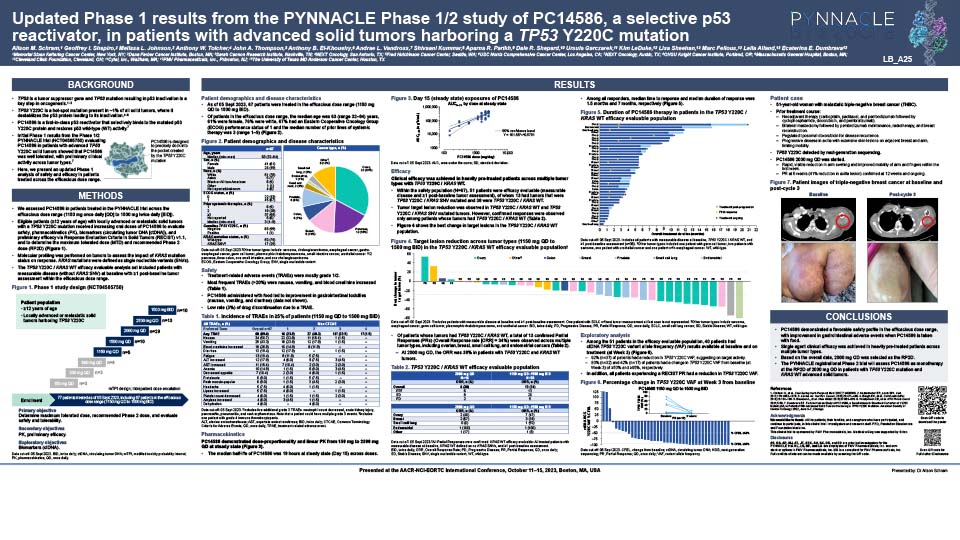
AACR-NCI-EORTC 2025, Schram et al, Poster presentation, PYNNACLE Phase 2: Initial analysis of efficacy and safety of rezatapopt
(Disponibile in inglese)
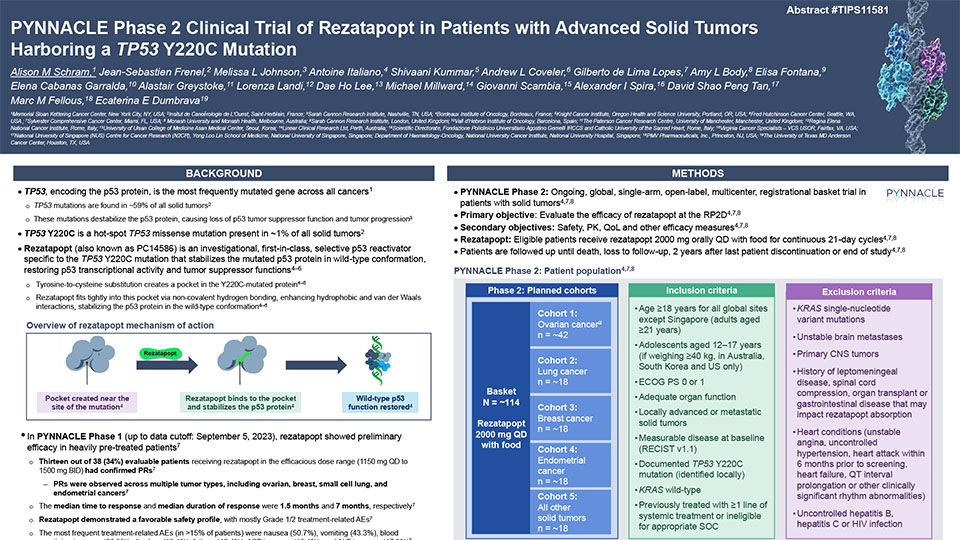
ASCO 2025, Schram et al, Poster presentation, PYNNACLE Phase 2: Study design and protocol
(Disponibile in inglese)
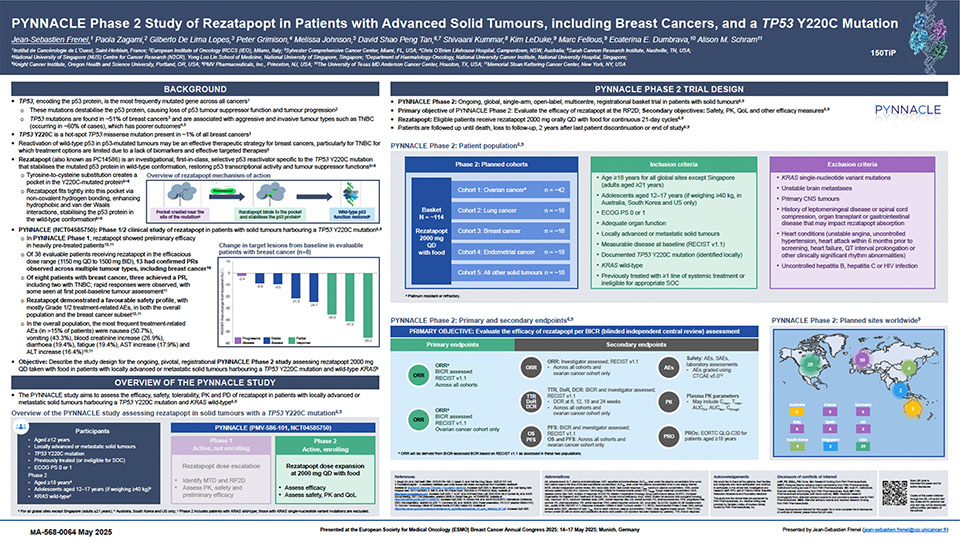
ESMO Breast 2025, Frenel et al, Poster presentation, PYNNACLE Phase 2: Study design and protocol
(Disponibile in inglese)
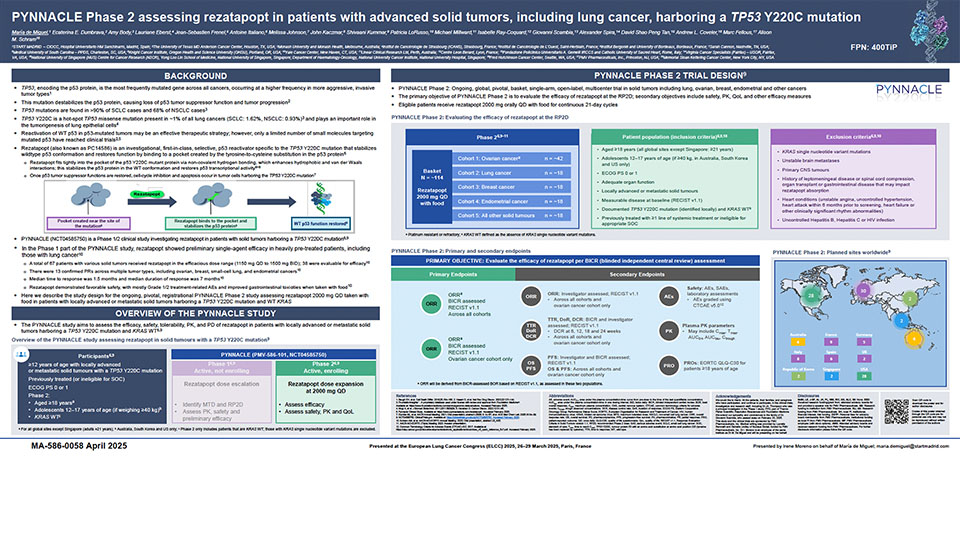
ELCC 2025, Miguel et al, Poster presentation, PYNNACLE Phase 2: Study design and protocol
(Disponibile in inglese)
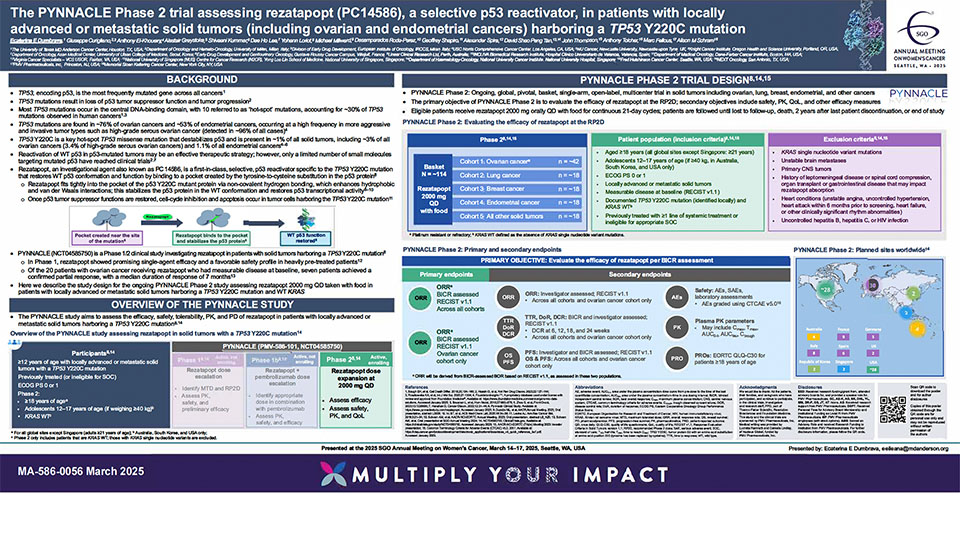
SGO 2025, Dumbrava et al, Poster presentation, PYNNACLE Phase 2: Study design and protocol
(Disponibile in inglese)
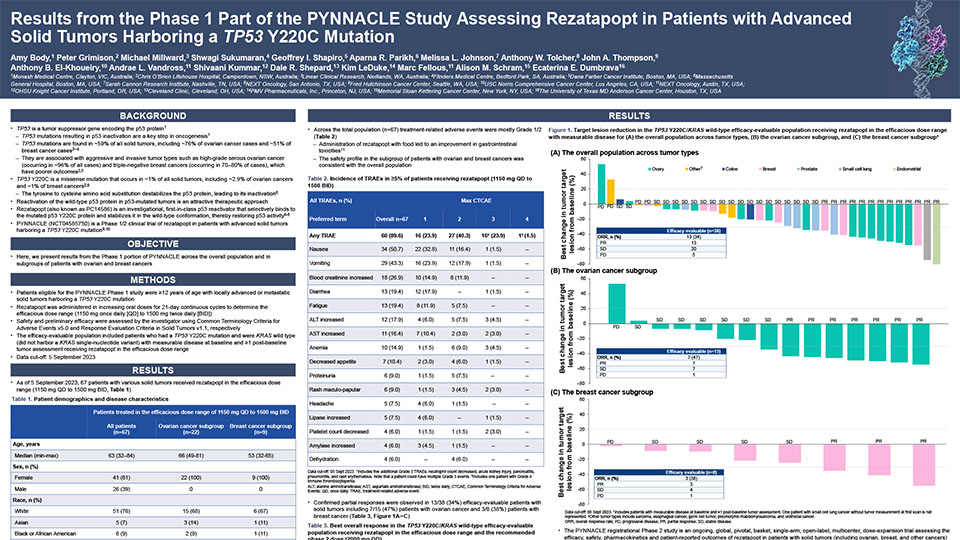
APOS 2025, Body et al, Oral presentation, PYNNACLE Phase 1: Efficacy and safety across all tumor types and ovarian and breast cancer cohorts
(Disponibile in inglese)
2024
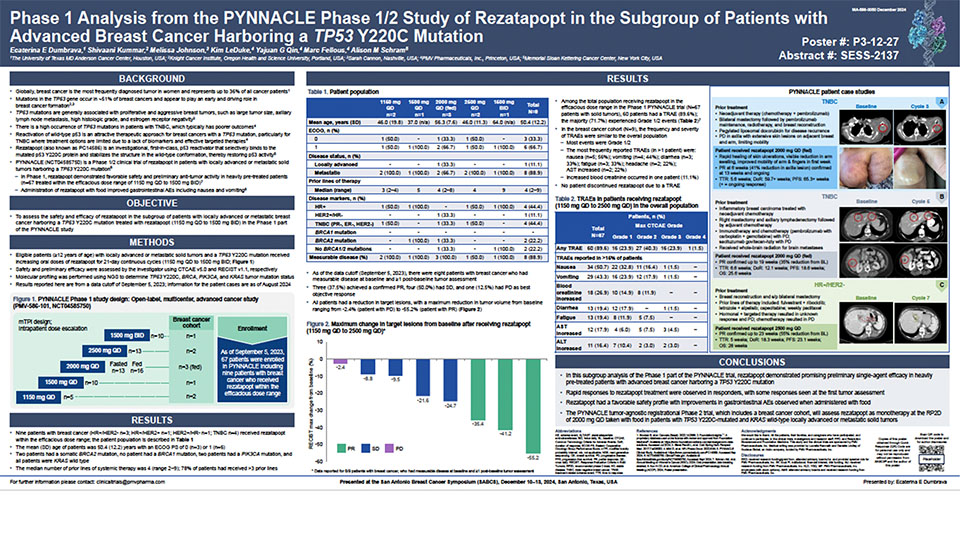
SABCS 2024, Dumbrava et al, Poster presentation, PYNNACLE Phase 1: Efficacy and safety of rezatapopt in the breast cancer cohort with patient cases
(Disponibile in inglese)
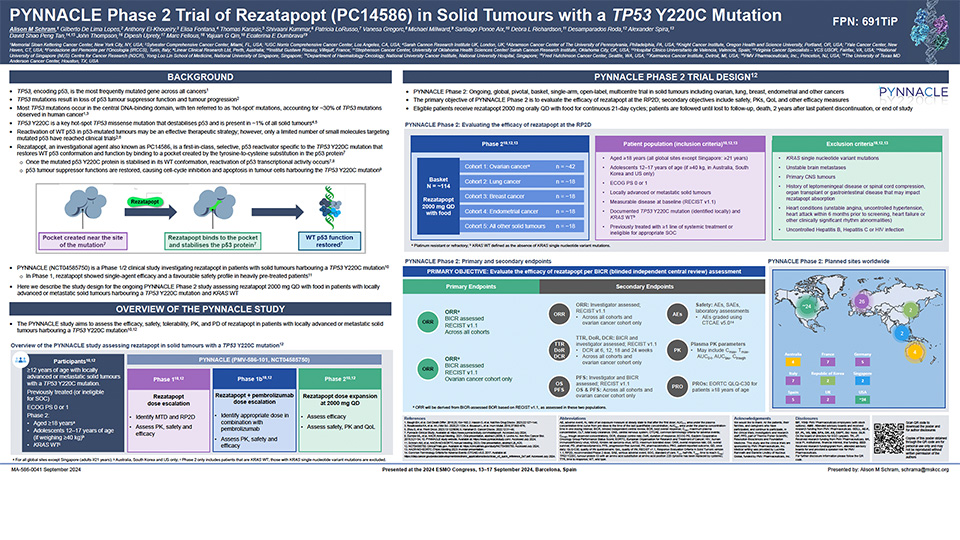
ESMO 2024, Schram et al, Poster presentation, PYNNACLE Phase 2: Study design and protocol
(Disponibile in inglese)
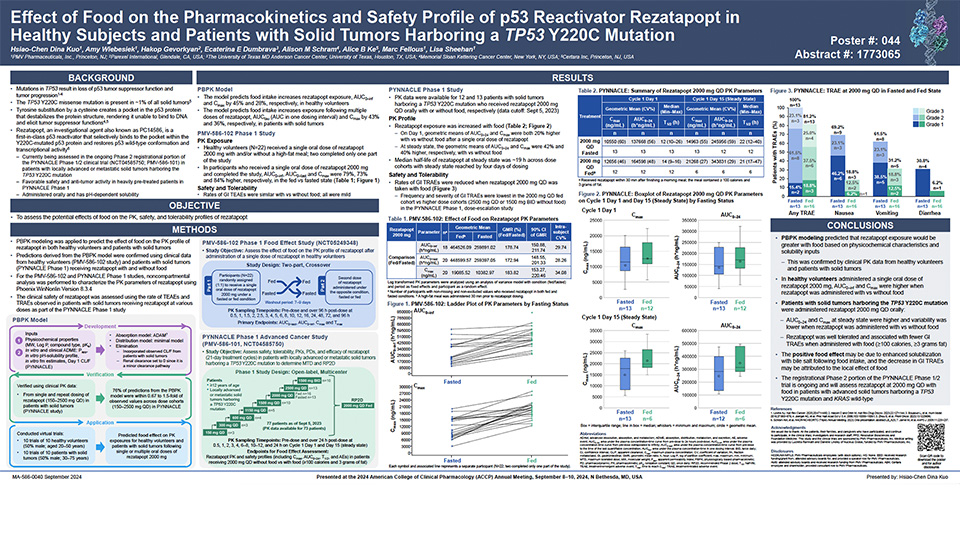
2023

Pubblicazioni
Recent publications
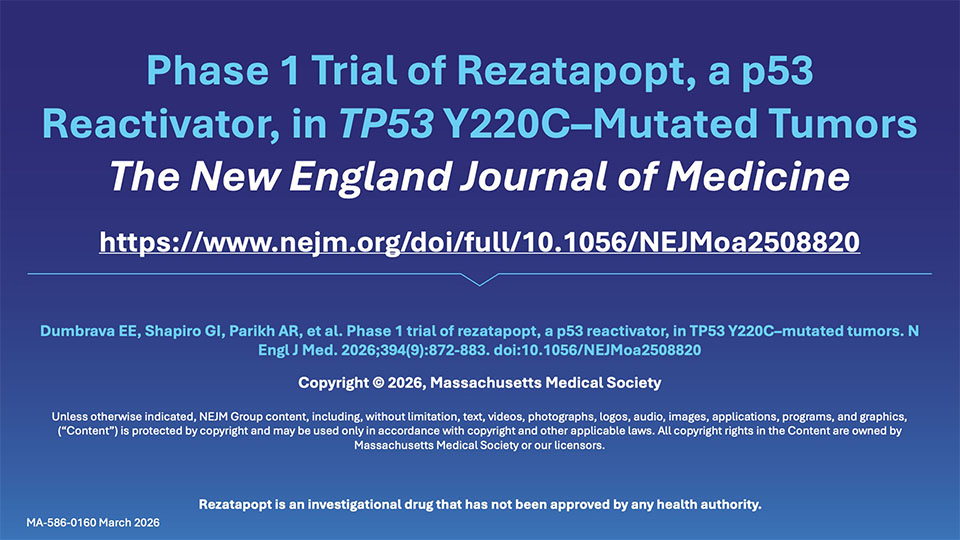
Dumbrava et al, Phase 1 Study of Rezatapopt, a p53 Reactivator, in TP53 Y220C–Mutated Tumors, NEJM, 2026
(Disponibile in inglese)
2026
2025
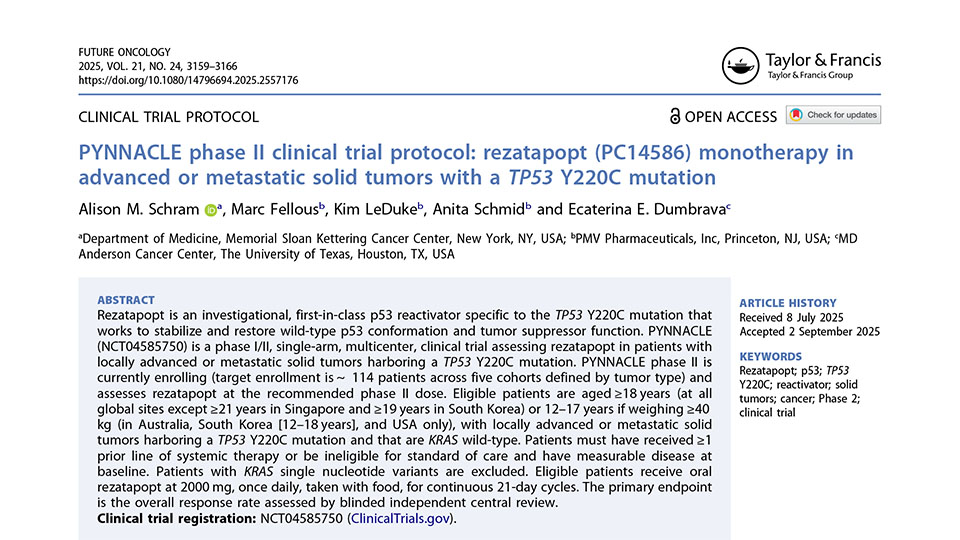
Schram et al, PYNNACLE phase II clinical trial protocol: rezatapopt (PC14586) monotherapy in advanced or metastatic solid tumors with a TP53 Y220C mutation, Future Oncol, 2025
(Disponibile in inglese)
Puzio-Kuter et al, Rezatapopt: Restoration of tumor suppressor function of Y220C-mutant p53, Cancer Discov, 2025
(Disponibile in inglese)
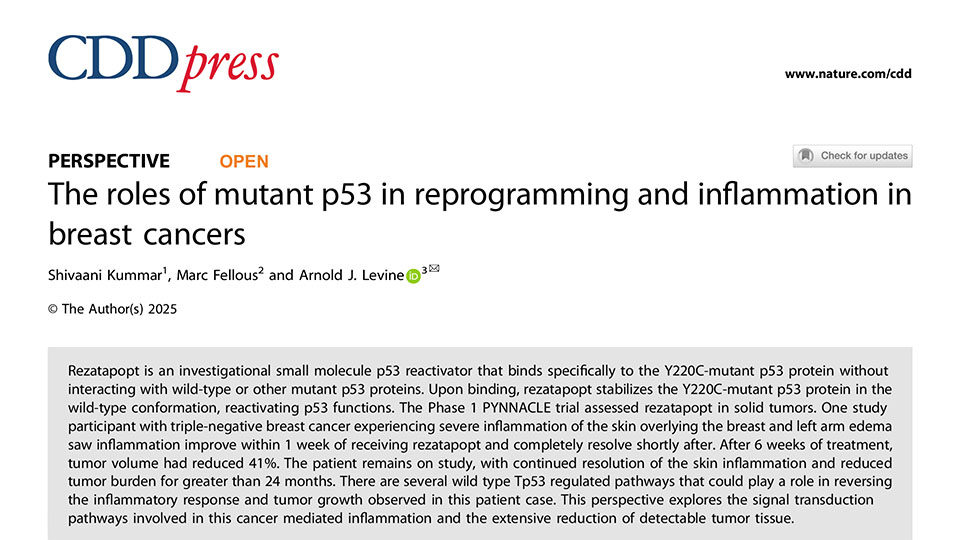
Kummar et al, The roles of mutant p53 in reprogramming and inflammation in breast cancers, Cell Death Differ, 2025
(Disponibile in inglese)
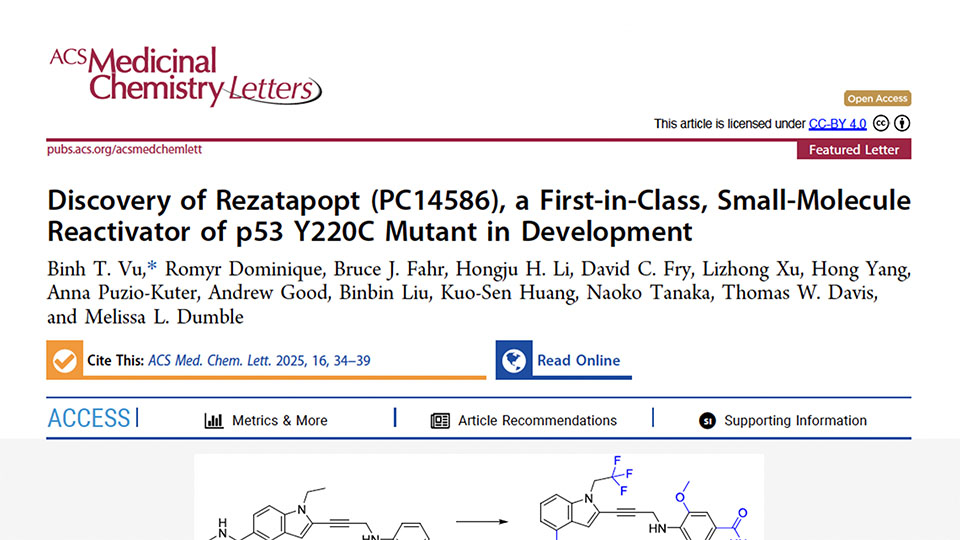
Vu et al, Discovery and development of Rezatapopt, ACS Med Chem Lett, 2025
(Disponibile in inglese)
Ulteriori informazioni sugli studi clinici
Il suo paziente può acquisire maggiori informazioni sugli studi clinici tramite il National Cancer Institute, l’American Cancer Society e la European Medicines Agency.
Per saperne di più su rezatapopt in studio nello studio PYNNACLE, visitare il sito clinicaltrials.gov.
Contattare il Centro informazioni studi clinici PMV Pharmaceuticals
+1 (609) 235-4038
clinicaltrials@pmvpharma.com
Rezatapopt è un agente sperimentale che non è stato approvato da alcuna autorità sanitaria.
Le immagini non ritraggono i reali partecipanti allo studio.
MA-586-0107 October 2025